Custom Smart Safety Helmet Platform vs Off-the-Shelf: How Industrial Teams Should Decide

For most industrial teams, the right call is neither extreme: start from a proven base helmet, and customize the platform layer that owns your integrations, data and workflows.

Mahil Jasani
Nov 2, 20267 min readUpdated Nov 2, 2026
Share:
LinkedInX
Optical Helmet in Orange Halo-2

The short answer

For most industrial teams, the right call is neither extreme: start from a proven base helmet, and customize the platform layer that owns your integrations, data and workflows. Building a helmet from scratch rarely pays back. Buying a fixed vendor stack rarely fits teams whose safety data must flow into EHS, ERP and maintenance systems.

Three conditions decide which path fits:
Buy the whole stack when your fleet is small, your use case is standard (SOS, location, alerts) and you need to be live in weeks, not quarters.

Configure a base product and customize the platform when your safety workflow is non-standard, your data must feed systems you already run, your contracts require data residency or ownership, or you run mixed hardware across sites.

Build from scratch only when no existing product can be configured for your environment or form factor, and your volume justifies a full engineering and certification program.

The rest of this guide shows how to test your own situation against those three conditions.

What “off-the-shelf” actually means now

Off-the-shelf is no longer one stack. It splits into three layers you can source separately: wearable hardware, a cloud platform that runs the alerts and dashboards, and the integrations that connect safety data to the systems your teams already use.

That split changes the build-vs-buy question. You are no longer choosing between “their product” and “our product.” You are choosing, layer by layer, what to rent, what to configure and what to own.

Hardware. Wearables sold with a subscription or outright. Published subscription tiers for connected wearables commonly run in the tens of dollars per device per month, usually on multi-year terms.

Platform. Some vendors now sell device-agnostic safety software that runs on phones and on other makers’ wearables, so buying the software no longer forces you to buy their hardware.

Integrations. Prebuilt connectors to EHS and HR systems exist, but they cover the systems the vendor chose, not necessarily yours.

Treat price points like these as the going rate for connected-wearable subscriptions, not as a helmet quote. Hardware tier, software licensing and certification each price independently, which is why what drives smart helmet program cost is a better starting point than a per-worker number.

When buying wins

Buying wins when speed matters more than control, and your requirements look like everyone else’s. Four tests tell you whether that is you.

1.

The job is standard. SOS, location and threshold alerts are mature features. A subscription gets you live without a build.

2.

You need proof the idea works first. Smart PPE is still rare: only 5% of organizations in the 2026 ISEA and J.J. Keller PPE study said they use it, and 18% were unsure. Cost, data privacy and integration with existing safety systems were the barriers cited. A scoped pilot limits the cost of finding out, and a 90-day smart helmet pilot program gives you a structure for it.

3.

Your sites need hardware certified for a specific region or area. Whoever you buy from, ask for the certificates that apply to your region and area classification before you sign.

4.

No one on your team will own it. A custom platform needs an owner for updates, security reviews and support. If nobody has that job, a vendor who does will serve you better.

If all four hold, buy, run a pilot, and revisit the question after a year of real data.

When custom wins

Custom wins when your safety data has to do work a vendor’s product was not designed for. Five signals point that way.

1.

Integration depth. You need event-level data in your EHS, ERP, maintenance or HR systems. Prebuilt connectors cover the systems a vendor chose. If your stack is not one of them, you are commissioning that integration yourself.

2.

Data ownership and residency. Your contracts or regulators require worker safety data to live in your cloud account or a specific region.

3.

Mixed hardware. Different sites run different wearables. A platform you own can sit above all of them, instead of leaving you with one vendor portal per device type.

4.

Non-standard workflows. Your escalation rules, permit-to-work gates, contractor onboarding or shift handovers do not fit a vendor’s templates.

5.

Scale economics. Subscription cost grows with every device. A custom platform’s cost is mostly fixed, so it can overtake a subscription as the fleet grows. The next section shows where.

None of this requires building the helmet from scratch. Custom here means configuring a proven base product and owning the software layer: ingestion, rules, alerts, integrations and dashboards.

The 3-year cost model

At $35 per device per month, a subscription costs $1,260 per device over 36 months. A custom platform pays off once your fleet size multiplied by that figure exceeds the platform’s build and run cost.

The table below applies three illustrative monthly prices to four fleet sizes. They are proxies for published connected-wearable subscription tiers, not quotes for any specific helmet.

Fleet size3-year cost at $22/device/monthAt $35At $48

100 devices

$79,200

$126,000

$172,800

250 devices

$198,000

$315,000

$432,000

500 devices

$396,000

$630,000

$864,000

1,000 devices

$792,000

$1,260,000

$1,728,000

The break-even fleet size for a custom platform is:

N^{*} = frac{B}{36P – H}

B is the 36-month build and run cost of the platform. P is the monthly subscription price per device. H is the hardware cost per device in the custom path, if you buy hardware outright. At P = $35 and H = $0, a $500,000 platform breaks even near 397 devices. B here is a placeholder: replace it with a real quote.

Our guide to what drives smart helmet program cost explains how hardware tier, software licensing and certification set B and H.

Before you compare, check what the subscription includes. The published tiers bundle cellular connectivity, cloud logs, software updates and warranty. Your custom budget must cover those too, along with security reviews, support and integration upkeep.

Why you should not build the helmet from scratch

Unless no existing product can be configured for your environment, do not build the helmet from scratch. A hard hat is certified protective equipment, and adding batteries, radios and sensors makes certification part of your program.

Certification is a line item, not a rounding error. Head protection is tested to ANSI/ISEA Z89.1 for US sites and to EN 397 for EU deployments, and the two are not interchangeable. A program spanning both prices two certifications, and a new wireless module or region-specific variant can reopen approvals that a stock configuration already carries.

Three costs make building from scratch a poor default:

Certification per region and per change. Each market has its own approvals, and a design change can reopen the work.

Comfort and compliance. Comfort and fit, compliance and cost are the three dominant PPE pain points in the 2026 ISEA and J.J. Keller study. A heavier, hotter helmet makes the first two worse.

Lifecycle burden. Batteries, sensor drift, firmware updates, repairs and spares become your problem for the life of the fleet.

Starting from a proven base product moves much of that work off your plan. Ask any supplier which certificates the quoted configuration already carries, and which changes would reopen them. If you want to add sensors to a certified helmet, check the helmet maker’s rules first, because many restrict which accessories and modifications keep the certification valid.

Integration and data ownership

The cheapest time to protect your data is before you sign, because the exit cost is set by the data model, not the contract. If worker events live in a vendor’s portal and schema, leaving means rebuilding your history and every integration built on it.

Own the event model, whoever supplies the devices. A minimal canonical event carries:

worker or badge ID (pseudonymous where possible)

device ID and type

event type (fall, impact, SOS, no-motion, threshold breach)

severity, timestamp and location or zone

acknowledgement status and who responded

Then put a test to every vendor and to your own build:

1.

Can you export all raw events and the device registry, in a documented schema, on request?

2.

Where is the data stored, and which subprocessors touch it?

3.

Are API rate limits and webhooks sufficient for your EHS and maintenance workflows?

4.

Can another vendor’s hardware feed the same platform?

Ask the same questions of every supplier, including us. Efour’s Smart Helmet reports over cellular to a cloud admin portal and offers REST APIs for third-party monitoring systems. Whichever vendor you choose, get the answers to the four questions above in writing.

Privacy and worker acceptance

Privacy risk depends on what the helmet measures, and the rules differ sharply between the US and the EU. This is not legal advice: confirm each point with counsel in every jurisdiction where you deploy.

United States. Vendor material often lumps all worker data under biometric privacy laws. The statute is narrower. Illinois’ BIPA defines a biometric identifier as a retina or iris scan, fingerprint, voiceprint, or scan of hand or face geometry. Heart rate or skin temperature is not on that list. A helmet camera with face matching, a voice-ID push-to-talk, or a fingerprint login is. Texas’ law uses a similar list. The practical design rule: avoid identity-linked biometrics unless you have legal sign-off and written consent processes.

EU and UK. Data concerning health is special category data under GDPR Article 9. Heart-rate monitoring counts as health data even though it is not biometric identification. You need a lawful basis under Article 6 and a separate Article 9 condition, and employee consent is rarely treated as freely given. An employer’s legal obligations on workplace health and safety can support processing. Expect a data protection impact assessment.

Build these controls in from day one:

collect safety events, not continuous vitals, unless a hazard requires them

aggregate for trends and restrict identified data to named safety roles

give workers access to their own data and set retention limits

state in policy that data is not used for discipline unless you decide otherwise and say so

A helmet with a camera, microphone or live video adds a second question beyond biometrics: recording rules. Decide when recording is on, who can watch live, and how long footage is kept, and publish that policy before day one.

Acceptance. Only 45% of organizations involve employees in choosing their PPE, according to the 2026 ISEA study, and that gap was tied to fit and compliance problems. Put worker representatives in your pilot from the first week.

Efour’s smart helmet pilot program plan builds the same rule in: volunteers first, a written data policy before day one, and workers seeing their own data before a supervisor does.

Reference architecture: proven base hardware, owned platform

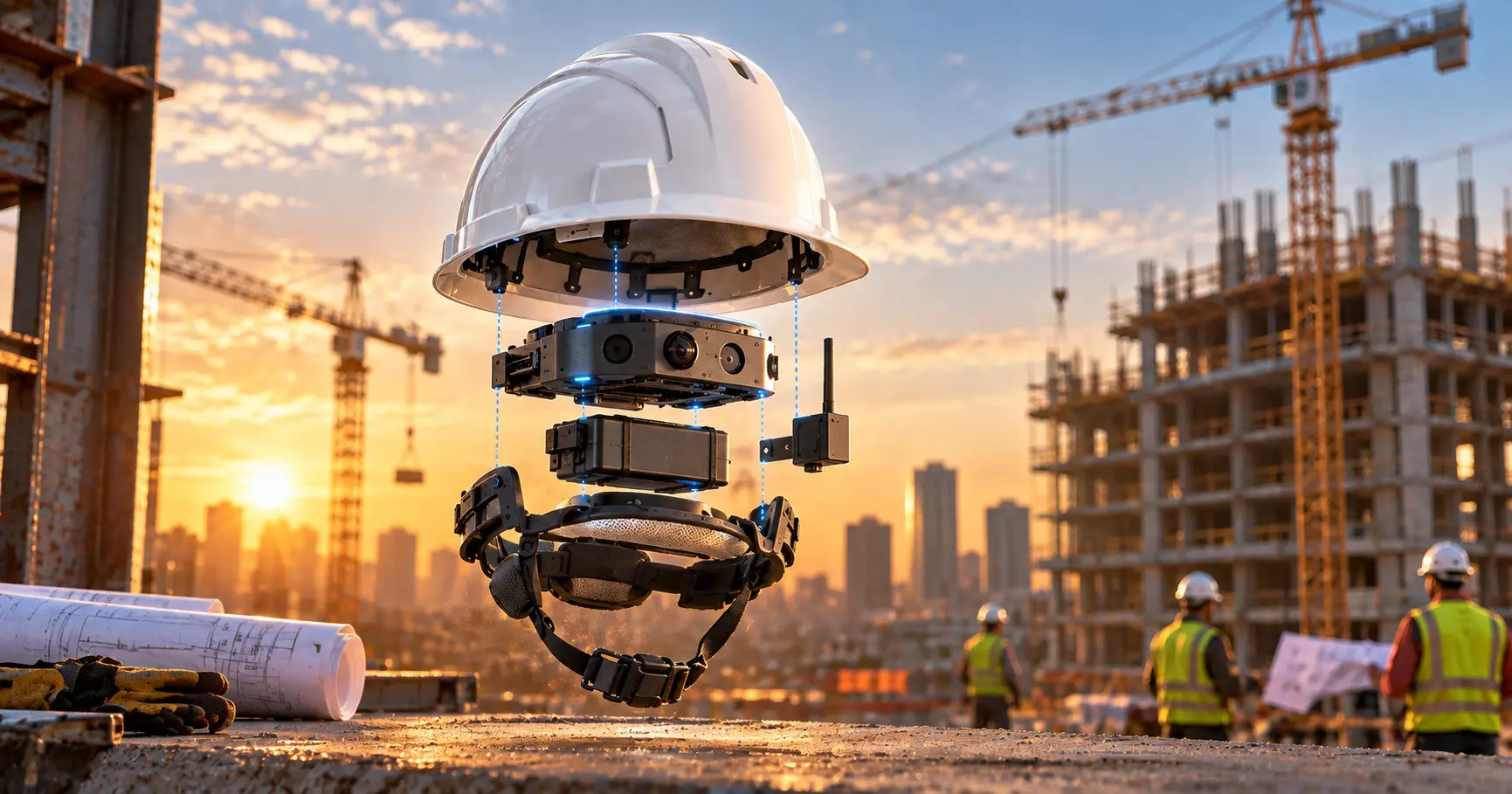
This model keeps a proven device at the edge and puts everything you need to control in a platform you own. Six layers, in the order data travels:

1.

Base helmet or wearable. Bought or configured, not built from scratch. It captures motion, location and environment signals.

2.

Site connectivity. Cellular, BLE, UWB or LoRa, chosen by site conditions and the device’s supported radios.

3.

Ingestion and normalization. Maps every device’s payload into your canonical event model.

4.

Rules and alerting. Thresholds, escalation, acknowledgement and no-response handling.

5.

Integrations. Connectors to EHS, maintenance, HR and dispatch systems, plus an export API.

6.

Dashboards and reporting. Role-based views for supervisors, safety officers and auditors.

Layers 3 to 6 are where custom work earns its keep. Layer 1 is where building from scratch rarely does.

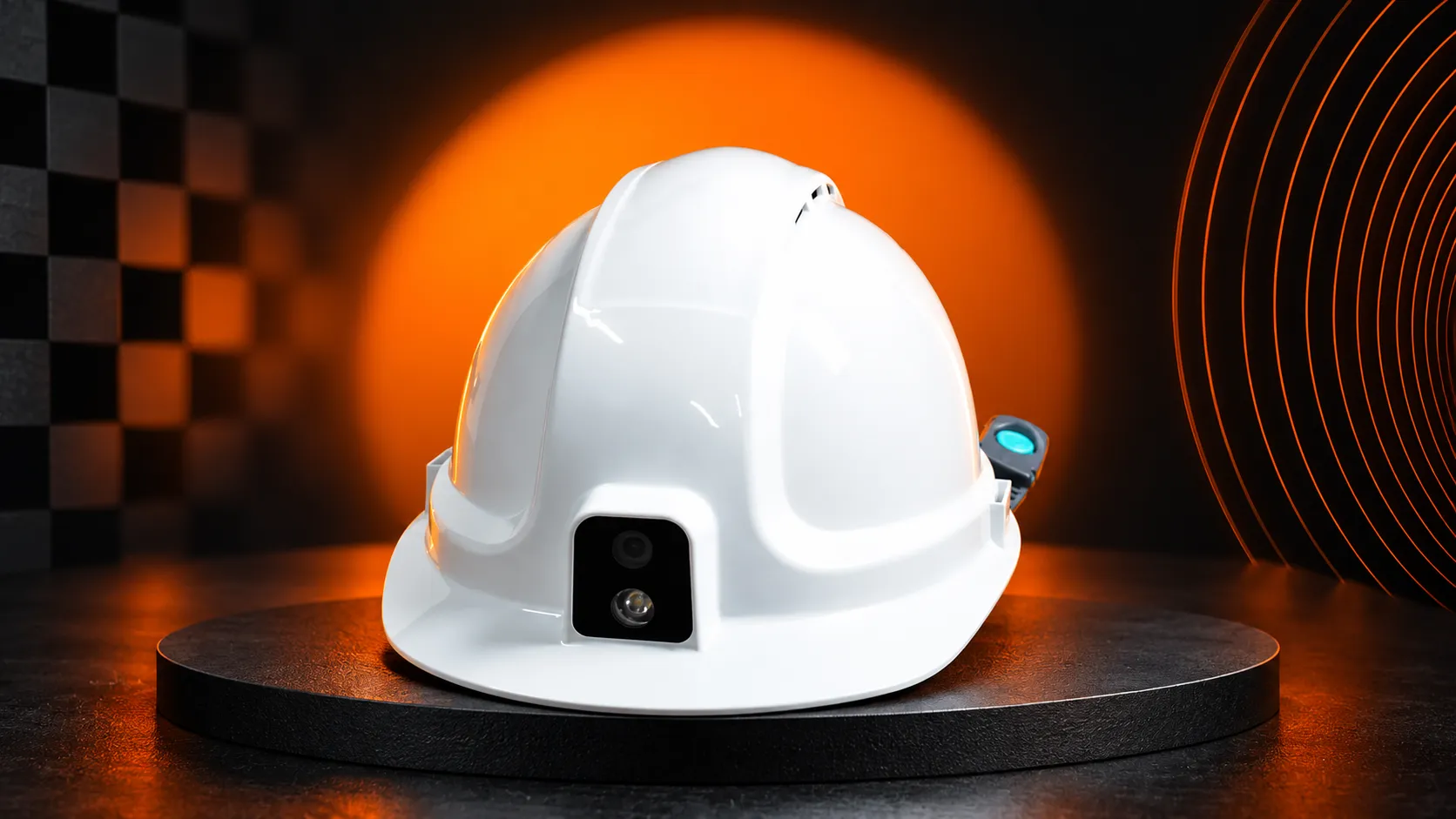
Where this model shows up in practice. Efour’s Smart Helmet follows this pattern. Its product has cellular and Bluetooth connectivity, a cloud admin portal, multi-site support, SOS, push-to-talk, live video and configurable sensor modules for gas, temperature, humidity, proximity and voltage. The Model H1 adds a 13MP camera, a removable 4,000 mAh battery and an IP66 rating, with an SOS that sends live video to a dispatcher platform. Sensor tier, software licensing and certification path are configuration inputs, not fixed specs, and Efour’s hardware and embedded engineering services and connectivity and edge AI stack sit behind them.

Decision scorecard

Configuring a base product and customizing the platform leads on integration, data ownership and fleet-scale cost, while buying the whole stack leads on speed and a single point of contact. The ratings are our qualitative assessment, not measurements.

CriterionBuy a vendor's whole stackConfigure a base product and customize the platformBuild from scratch

Time to first live site

Fastest

Moderate

Slowest

Area and region certification

Included in the vendor’s certified configurations

Depends on configuration; confirm what the base product already carries

Your program, per region

Integration with your systems

Limited to vendor connectors

Full control at the platform layer

Full control

Data ownership and residency

Vendor terms

Yours

Yours

Mixed hardware across sites

Weak unless device-agnostic

Strong

Strong

Upfront cost

Lowest

Moderate

Highest

Cost at large fleet size

Grows per device

Mostly fixed platform cost plus devices

Mostly fixed, plus hardware lifecycle

Internal ownership burden

Low

Moderate

High

Best fit

Standard use case, small fleet

Non-standard workflows, existing EHS/ERP stack

Rarely justified

Frequently asked questions

For most industrial teams, start from a proven base helmet and customize the platform layer. Buy the whole stack if your use case is standard and your fleet is small. Build from scratch only if no existing product can be configured for your environment.

Sometimes. Some vendors sell device-agnostic safety software that connects wearables from other manufacturers. Check the supported-device list and the export terms before you commit, because “agnostic” varies by vendor.

Three levers set the number independently: hardware tier, software licensing and certification. Our guide to smart helmet program cost breaks them down and explains why per-worker pricing misleads. For an estimate against your site and headcount, contact Efour.

A single-site pilot can run in 90 days. Efour’s pilot rollout plan covers site assessment, worker onboarding and KPI tracking, and ends with an explicit scale, adjust or stop decision.

Under Illinois BIPA, probably not: the statute lists retina or iris scans, fingerprints, voiceprints and face or hand geometry. In the EU and UK, the same data is health data under GDPR Article 9. Confirm with counsel in each jurisdiction.

That depends on your region and area classification. Head protection is tested to ANSI/ISEA Z89.1 in the US and EN 397 in the EU, and hazardous-area ratings are separate. Ask any supplier for the certificates that apply to the exact configuration quoted.

The Efour Smart Helmet combines SOS alerts, push-to-talk, live video, configurable sensor modules and a cloud admin portal with multi-site support. It is used across construction, mining, oil and gas, and industrial sites. To scope a pilot or configuration for one site, talk to Efour.

Related Articals

Engineering Solutions to Waste Management
Product Engineering

Engineering Solutions to Waste Management

Waste management has moved past hauling and landfill logistics into a design, materials, and systems problem. This guide breaks down the five categories of engineering solutions to waste management — prevention, circular recycling, energy recovery, treatment and disposal, and smart monitoring — covering what’s proven, what’s emerging, and how different industries apply each one.

Paresh Sagar

Paresh Sagar

Oct 26, 2026

Smart Helmet Pilot Program A 90-Day Rollout Plan for One Site
Product Engineering

Smart Helmet Pilot Program: A 90-Day Rollout Plan for One Site

A pilot program succeeds or fails on adoption, not on hardware. A helmet that streams live video and runs push-to-talk voice over 4G does nothing for a site if half the crew leaves it in a locker. Any 90-day plan worth following has to be built around that fact from day one, not treated as a training problem to solve in week six.

Hitesh Gambhava

Hitesh Gambhava

Sep 24, 2026

Smart Helmet Program Cost
Product Engineering

How Much Does a Custom Smart Helmet Program Cost Per Worker, Per Site

Cost per worker is the wrong question for a customized smart helmet program. Hardware tier, software licensing, and certification price independently, and none of them scale with headcount. A breakdown of what actually sets the number, with the market data behind it.

Mahil Jasani

Mahil Jasani

Sep 11, 2026

Product Engineering Strategy
Product Engineering

Product Engineering Strategy: Aligning Technology, Innovation, and Business Goals

Enterprises invest millions into hiring engineering talent, development tools, and infrastructure. Still, it’s never error-free! Products ship late, technical debt gets compounded, and leadership continues to raise concerns about misalignment between engineering priorities and business objectives.

Paresh Sagar

Paresh Sagar

Aug 21, 2026