Efour leadership is in the US, Oct 9–24. Miami · Kansas City · Houston · New York

Meet the team

7 Types of Worker Safety IoT Solutions Businesses Can Implement to Reduce Workplace Risk

A technician needs help at a remote site. A forklift approaches a blind intersection. Heat builds around a production line while supervisors remain unaware of changing conditions.

Hitesh Gambhava
Oct 8, 20269 min readUpdated Oct 8, 2026
Share:
LinkedInX
Connected Industrial Safety Network

A technician needs help at a remote site. A forklift approaches a blind intersection. Heat builds around a production line while supervisors remain unaware of changing conditions.

These situations create different risks, but they share a common challenge: critical information may not reach the right person quickly enough.

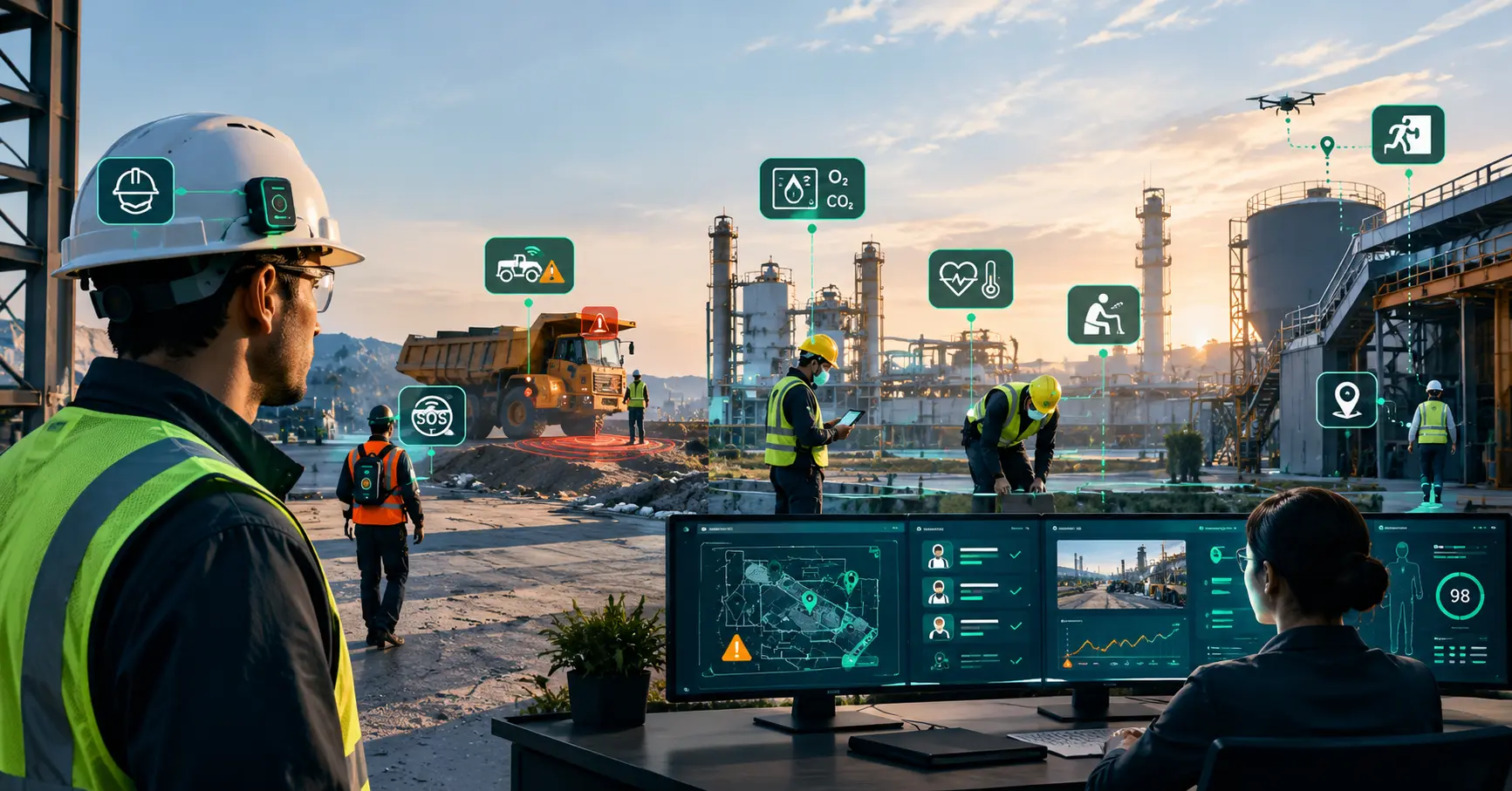
Worker safety IoT solutions connect devices, sensors, and software to help businesses identify hazards, communicate with employees, and coordinate responses. Their value comes from turning information into timely action.

For manufacturers, construction companies, utilities, and logistics operators, the starting point is a specific workplace risk. This article explores seven solution types, beginning with the Smart Helmet engineered by Efour, and explains where each can fit into a practical safety program.

What Are Worker Safety IoT Solutions?

Worker safety IoT solutions use connected equipment to collect and share information about workers, their surroundings, or potential hazards. Depending on the application, they can deliver local warnings, notify supervisors, or record events for investigation.

A typical system combines a wearable or sensor, a communication network, and software that routes alerts to responsible people.

These tools support an established safety program. NIOSH’s hierarchy of controls prioritizes eliminating hazards, substituting safer alternatives, and implementing engineering controls before relying on administrative measures and PPE. Connected monitoring should strengthen that approach.

Worker Safety IoT Solutions at a Glance

SolutionPrimary purposeTypical applications

Smart helmets

Connect field workers with remote support

Construction, utilities, manufacturing

Lone worker monitoring

Escalate distress or missed check-ins

Remote maintenance, security, field service

Proximity warning systems

Warn about approaching vehicles or equipment

Warehouses, yards, industrial sites

Connected environmental monitoring

Detect hazardous atmospheric conditions

Processing plants, wastewater facilities

Heat stress monitoring

Identify conditions requiring heat controls

Outdoor work, foundries, hot production areas

Ergonomic wearables

Assess repetitive movement and awkward posture

Assembly, picking, manual handling

Location and evacuation systems

Support worker visibility and accountability

Large plants, campuses, complex facilities

1. Smart Helmets for Connected Field Crews

Field teams often need immediate support while working in places where holding a phone or tablet is inconvenient. A smart helmet brings communication, visual documentation, and alerting capabilities onto equipment workers already wear.

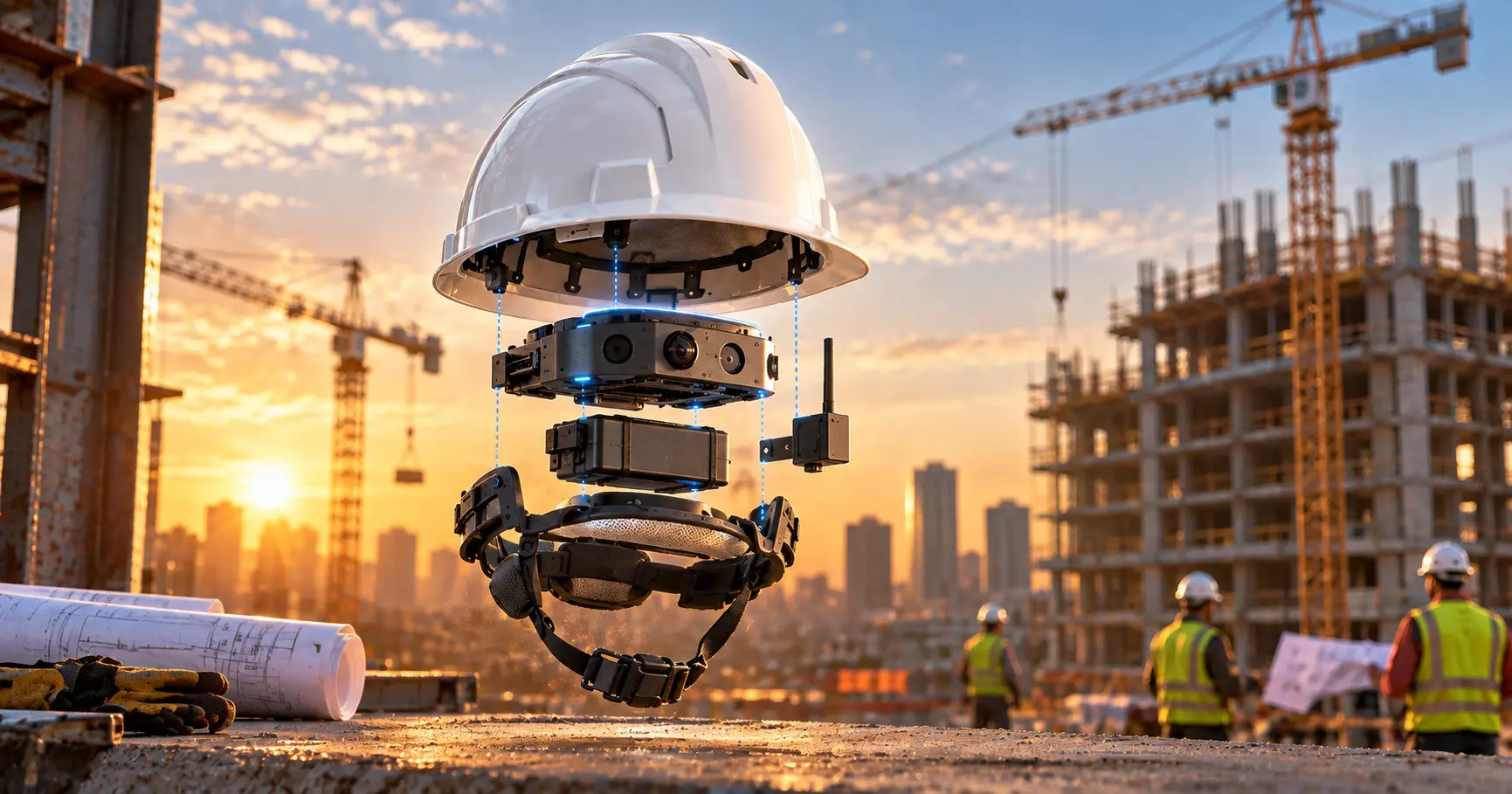
Efour has engineered the H1 Smart Helmet to connect field crews with their dispatcher platform. Its documented capabilities include 4G connectivity, an Android 12 platform, a 13MP camera, push-to-talk voice, and SOS alerts with live video.

A technician can share a visual record of an issue while a remote specialist provides instructions. If help is needed, the wearer can activate SOS so dispatch receives an alert alongside live video.

Key H1 Capabilities

CapabilityPractical application

Push-to-talk voice

Communicate with dispatch without holding a handset

SOS with live video

Provide visual context during an emergency escalation

13MP photo and video capture

Document inspections, site conditions, and incidents

Proximity alarm

Provide an additional warning, subject to its validated operating scope

Built-in flashlight

Support visibility during suitable low-light tasks

IP66 rating

Provide documented protection against dust and powerful water jets

Removable 4000 mAh battery

Support a planned charging and battery replacement routine

Android 12 and expandable storage

Provide an onboard computing platform with storage support up to 128GB

Consider a maintenance worker inspecting an unfamiliar asset. Sharing the view with a specialist can improve communication and reduce ambiguity about the condition being discussed.

Before rollout, assess helmet fit, camera positioning, network coverage, battery requirements, and compatibility with other PPE. Confirm the protective certifications and operating limits relevant to the task; an IP rating alone does not establish impact protection, electrical protection, or suitability for explosive atmospheres.

See how H1 fits your field operations. Discuss your work environment, dispatcher workflow, and deployment requirements with Efour.

Book a Smart Helmet Demo

2. Lone Worker Monitoring and SOS Devices

Employees working alone may have nobody nearby to notice an injury or respond to a call for help. Connected lone worker systems provide a structured way to maintain contact and escalate concerns.

Depending on the device, capabilities can include manual SOS, timed check-ins, inactivity alerts, or fall detection. Automatic detection must be evaluated against actual work patterns: a stationary task and a genuine emergency can produce similar signals.

For example, a remote technician could begin a timed check-in before an approved task. If the check-in expires, the system follows a defined escalation process.

The response process matters as much as the device. Specify who receives an alert, how they acknowledge it, and what happens if they cannot reach the worker. HSE guidance emphasizes regular contact, appropriate alarm arrangements, and testing emergency procedures.

Best fit: Remote maintenance, security patrols, field service, and isolated work areas where lone working is permitted.

3. Proximity Warning Systems for Vehicles and Equipment

Forklifts, loaders, and other mobile equipment create collision risks where people and vehicles share space. Blind corners, restricted visibility, and changing traffic patterns make these environments difficult to manage.

Connected proximity systems use compatible worker tags, vehicle devices, or sensing infrastructure to identify potentially hazardous approaches. Depending on the system, warnings can reach the pedestrian, equipment operator, or both. NIOSH identifies proximity sensing as a potential way to warn workers about nearby moving equipment.

An illustrative application is a warehouse intersection where shelving blocks the operator’s view. A warning can provide an additional opportunity to react before the pedestrian becomes visible.

Evaluate detection performance around metal structures, multiple vehicles, and realistic operating speeds. Excessive nuisance alarms can undermine attention.

Maintain physical separation, traffic rules, and visibility improvements. Automatic slowing or stopping requires a specifically engineered and validated safety function.

Best fit: Warehouses, loading docks, construction sites, and industrial yards.

4. Connected Gas and Environmental Monitoring

Some workplace hazards are difficult to recognize without instruments. Oxygen deficiency, toxic gases, and combustible atmospheres require appropriate detection methods.

Connected environmental monitoring combines suitable instruments with remote visibility. Portable devices can monitor conditions near the wearer, while fixed sensors monitor selected locations. Different hazards require different sensors; one general-purpose monitor cannot reliably detect everything.

For example, a connected gas detector could sound a local alarm while transmitting the event to a supervisor. That shared information can support the site’s established response procedure.

Instrument selection, placement, maintenance, and calibration determine whether the readings are useful. OSHA guidance stresses following manufacturer instructions and checking portable gas monitor function before daily use through the appropriate bump test or calibration check.

Local alarms should remain effective if remote connectivity fails. Monitoring also needs to sit within the required ventilation, entry, and rescue arrangements.

Best fit: Chemical processing, wastewater treatment, and other operations with identified atmospheric hazards.

5. Heat Stress Monitoring Systems

Heat risk depends on more than outdoor temperature. Humidity, radiant heat, workload, clothing, and acclimatization influence how a worker responds to the environment.

Connected heat monitoring can help safety teams observe changing conditions across work areas. Suitable systems may combine environmental measurements with task information; some also incorporate wearable physiological indicators.

OSHA identifies wet bulb globe temperature, or WBGT, as a useful assessment method because it accounts for environmental factors that a basic temperature reading misses. Workload and clothing must also be considered.

A practical application is monitoring several production zones so supervisors can adjust controls when conditions change.

Connect alerts to clear actions, including cooling, hydration, rest, and emergency escalation. Wearable readings should not be treated as a medical diagnosis or a guarantee that someone is safe.

Best fit: Construction, foundries, outdoor logistics, agriculture, and hot manufacturing environments.

6. Ergonomic Wearables for Movement Assessment

Repetitive lifting, awkward posture, and sustained bending can create risks that are difficult to understand through occasional observation alone.

Wearable motion sensors can collect information about posture and movement during selected tasks. NIOSH research describes how inertial measurement units can support ergonomic assessments by tracking body position over time.

For example, a picking team might use sensors during a defined assessment period to identify tasks involving frequent bending or twisting. The findings could inform changes to shelf height, workstation layout, or material handling.

Use the data to improve the task and its environment. A movement score alone does not establish injury risk, and posture measurements may need to be combined with information about load, force, and repetition.

Worker involvement is essential. Explain what is collected, who can access it, and how findings will guide improvements.

Best fit: Distribution centers, assembly lines, packaging operations, and repetitive manual handling.

7. Worker Location and Evacuation Accountability Systems

During an evacuation, teams need reliable information about who has reached an assembly point and who remains unaccounted for.

Location technologies can support personnel visibility across a facility. Depending on the system, wearable tags, readers, or other infrastructure provide zone-level or more precise location information. Commercial real-time location systems support personnel tracking across large facilities and yards.

An evacuation workflow can combine location information with assembly-point check-ins and a current personnel register. This may help coordinators identify discrepancies and direct follow-up.

However, a last recorded location is not confirmation of a person’s current position. Displays should make the age of location data clear.

Test coverage in stairwells, enclosed areas, and other difficult locations. Include contractors, visitors, missing tags, and manual reconciliation in drills.

Best fit: Large industrial plants, multi-building sites, and facilities with complex evacuation arrangements.

How to Choose and Implement the Right Solution

Start with a defined problem, such as delayed emergency acknowledgment or repeated pedestrian–vehicle conflicts. Then evaluate the complete workflow.

Define the Response Before Selecting Devices

Map what happens from detection to resolution. Identify the alert recipient, required action, escalation owner, and backup procedure. A notification has limited value if nobody knows what to do next.

Test Under Actual Site Conditions

Pilot on a manageable scale across representative shifts and tasks. Check signal coverage, alarm audibility, glove usability, comfort, battery performance, and missed or false alerts.

Include controlled failure scenarios, such as loss of connectivity or an unavailable dispatcher.

Plan Integration and Ongoing Ownership

Determine how events will enter existing incident-management or maintenance workflows. Assign responsibility for charging, calibration, replacements, updates, and support.

Budget for these recurring activities alongside hardware and software.

Protect Worker Data

Collect information needed for the safety purpose. Define access permissions, retention periods, and deletion processes. Explain monitoring clearly to workers, particularly where location, video, or physiological data is involved.

Need help defining a workable pilot? Share your priority hazard, site conditions, and existing systems with Efour.

Discuss Your Worker Safety IoT Requirements

How to Measure Whether the Pilot Is Working

Agree on baseline measurements and acceptance criteria before deployment.

MetricWhat it helps evaluate

Alert delivery and acknowledgment time

Whether information reaches a responsible person promptly

Missed and false alerts during controlled tests

Whether detection performs acceptably for the task

Coverage and device availability

Whether protection gaps appear during normal operation

Escalation completion

Whether alerts lead to the intended response

Worker adoption and feedback

Whether equipment fits the real workflow

Recurring hazard patterns

Where operational changes deserve attention

Interpret results carefully. An increase in recorded events may reflect better visibility. A short period without injuries does not establish that a device prevented them. Combine system measurements with worker feedback, observations, and longer-term safety trends.

Build Connected Safety Around Your Workplace

The right solution depends on the hazard and the action needed. Smart helmets support field communication. Other systems address isolated work, moving equipment, environmental exposure, heat, repetitive tasks, or evacuation accountability.

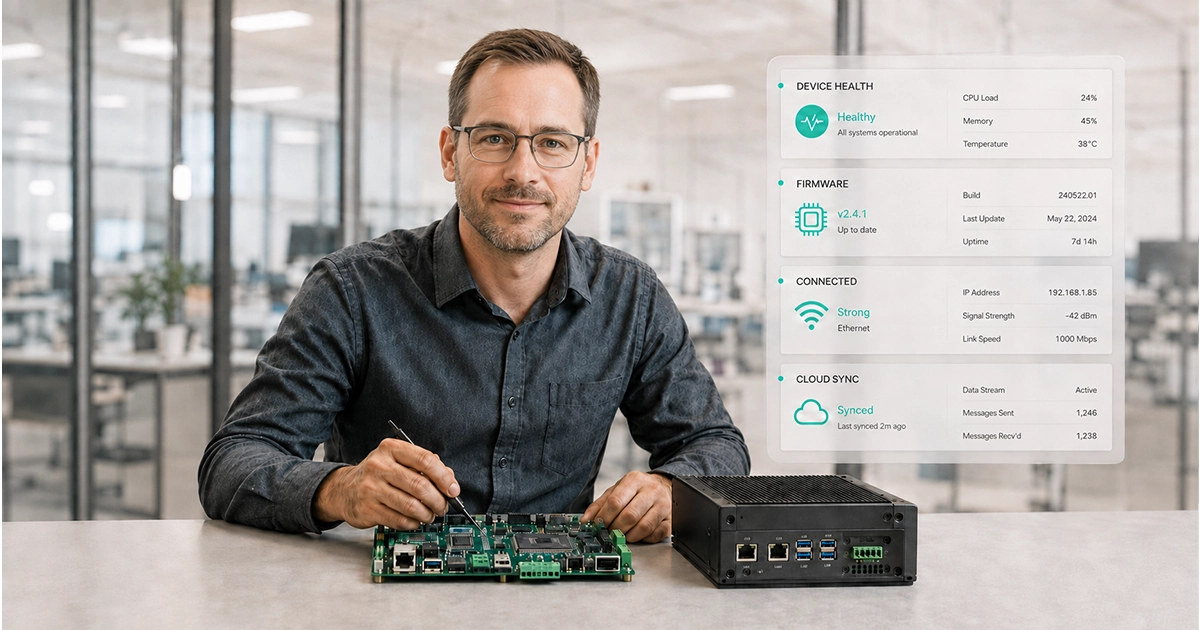
Efour’s capabilities span hardware, embedded firmware, IoT connectivity, cloud engineering, and system integration. That combination supports discussions about the full path from a field device to an operational workflow.

Start with one priority use case, validate it on site, and expand when the results support doing so.

Planning a connected worker safety solution?

Bring your site requirements to Efour to explore the H1 Smart Helmet or discuss a custom engineering scope.

Talk to an Efour Engineer

Frequently Asked Questions

Choose the solution that addresses a priority identified in your risk assessment. Field communication may favor smart helmets, while vehicle interaction or atmospheric exposure requires different capabilities.

Some provide local alarms or onboard recording without internet access. Remote notifications and live video depend on connectivity. Verify exactly which functions remain available during an outage.

No. Compliance depends on applicable requirements, equipment suitability, procedures, training, and implementation. Connected records can support a safety program, but they do not establish compliance by themselves.

Costs depend on device quantities, sensing requirements, connectivity, site infrastructure, integrations, software, and support. Include maintenance, calibration, training, and replacement equipment when estimating total ownership cost.